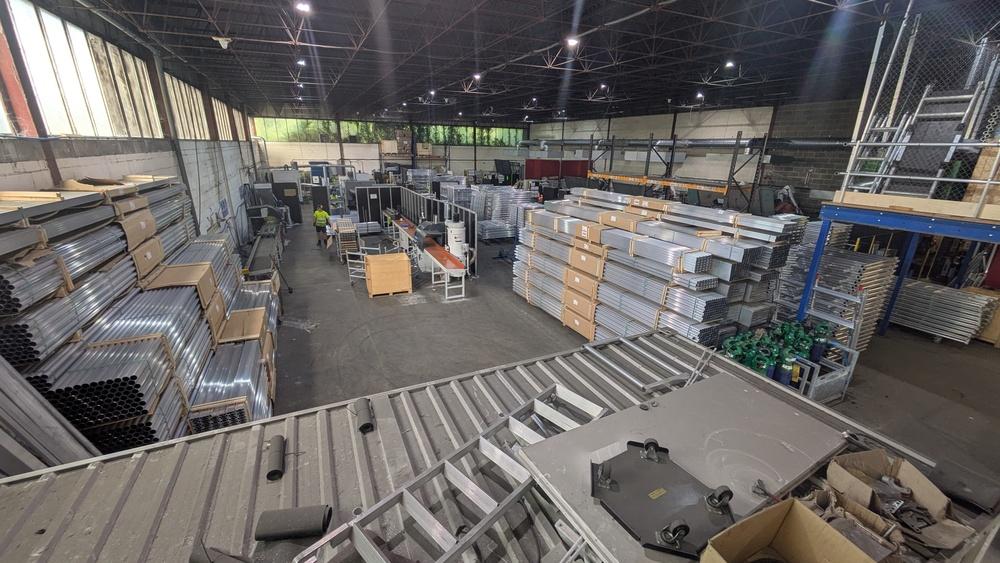
UTS Sales and Repairs has barely stopped developing new products since EHS 2026 – and it has expanded its manufacturing operation to keep pace. Sales Director Pete Harley and Director Michael Grainger explain what has changed…
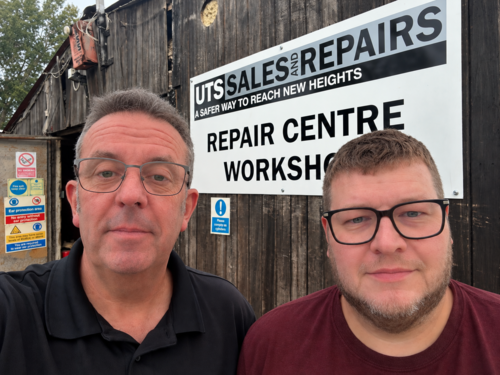
UTS Sales Director Pete Harley and Director Michael Grainger
It doesn’t seem that long since my last visit to UTS, but quite a lot has happened. Where do you start?
“Products, probably,” says Pete. “We’ve introduced a lot this year and we’ve expanded the range significantly.
“We’ve revised and relaunched the One Man Tower, introduced a stair conversion kit for it, and then developed the OMT+, which is bigger and taller, along with its own stair conversion kit. We’ve also introduced the GRP tower range, the adjustable podium, a full range of stagings, the lift shaft tower and the cantilever tower.
“The lift shaft tower goes up to a 20.1m platform height, while the adjustable podium is manufactured to the BS 8620 standard. The lift shaft and cantilever products are to BS 1139-6.
“There’s more in development as well. We’re working towards having a really comprehensive range – ultimately, we want to be one manufacturer you can go to for everything.”
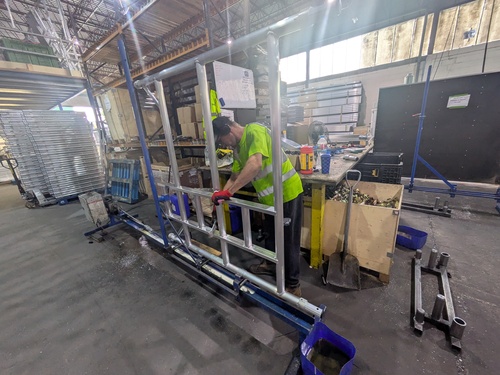
Tower welds are meticulously cleaned and checked
That is quite a burst of development. Michael, where do the ideas come from?
“It’s about our portfolio and where we’re trying to get to,” explains Michael. “I like designing different things, but for me it’s about adding value to a product and making sure we make a better product than there was before.
“I come up with ideas and then I’ll sit down with Alex, our designer, who does probably 90% of the design work. We go from there, and then obviously there’s structural engineering and testing involved.”
“Sometimes I’ll get a random WhatsApp from Michael at 3.30 in the morning, saying, ‘I’ve had this idea!’” adds Pete.
“We’re also putting products out with customers so they can compare them with what they already use. That gives us feedback from the hire company, but more importantly they can get feedback from their own customers using the equipment.”
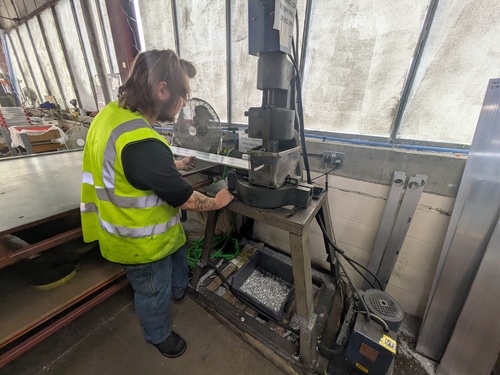
Toeboards are manufactured upstairs in the UTS factory
Presumably all these new products require additional manufacturing capacity?
“Massive investment,” says Michael. “We’ve had four new robot cells this year and we’ve probably invested around £3 million in machinery this year alone.
“The investment is about capacity, consistency and making sure we can respond. Where we see a bottleneck, we change things around and invest to remove it. We’ve put the investment in because we expect to see the returns over the next two or three years.”
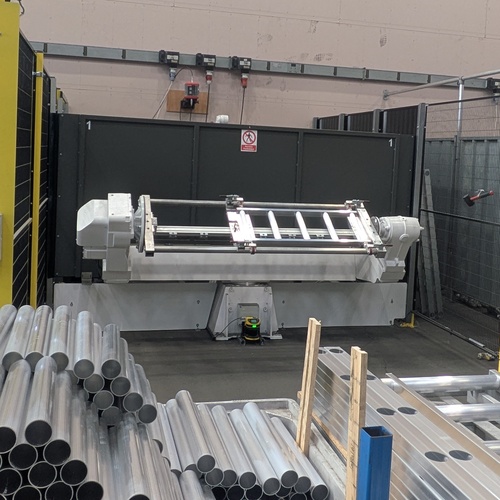
UTS has installed several new production robots this year
And there has been a fairly major expansion since I was last here too?
“Yes,” says Pete. “We’ve set up a completely separate podium manufacturing centre near Manston Airport.
“We manufacture podiums and stagings there. Previously, making podiums here was almost an interruption to the other manufacturing processes, so we wanted to move that production out and put it into a dedicated centre.
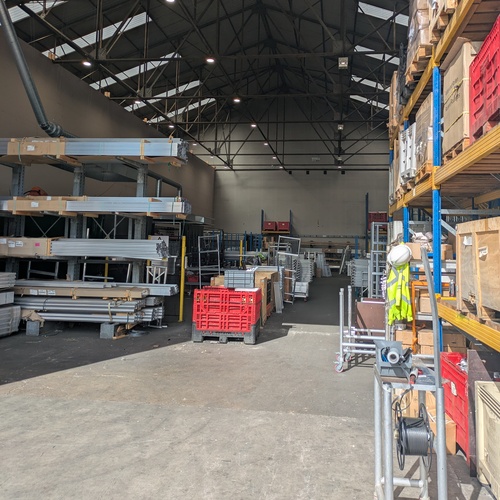
UTS podiums and stagings are manufactured in a separate unit
“We’ve also taken over the former Interlink premises and turned that into our repair centre, so the whole operation has changed quite considerably.”
“Breaking production into different areas actually works really well for us,” adds Michael. “Different products and components have their own areas, while the podium centre effectively looks after itself.
“It also gives us flexibility. Rather than putting everything into one enormous building, we can expand particular parts of the business as we need to.”
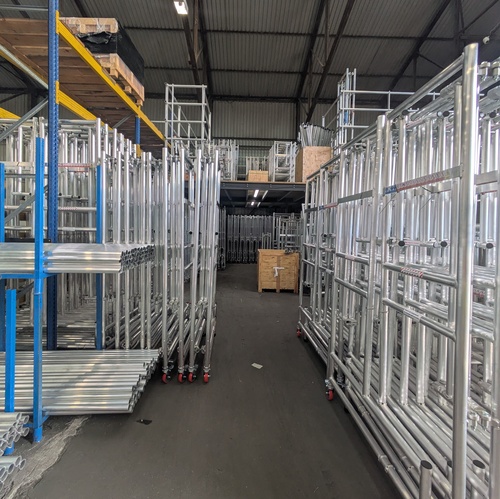
UTS keeps a plentiful stock at all times
Does automation mean that fewer people are required?
“No, because we’ve taken more people on anyway,” says Pete.
“We’re up to around 70 in manufacturing now,” continues Michael. “We’re investing in people as well as machinery.
“We like teaching people new skills and giving them an opportunity. If somebody eventually leaves and goes somewhere else, then at least we gave them that opportunity in the first place.”
You have always been very focused on the hire sector. Has that changed as UTS has grown?
“No. We understand the hire industry,” says Michael. “Hire people don’t buy equipment because it looks nice and shiny in their building – they want it to go out on hire.
“That means we have to be proactive and reactive to what people want. Quality, price and service are the three key things.
“Safety equipment should be available to everyone, not just the people with the money. We want to make a quality product here in the UK, but it still has to be competitive in the marketplace.”
“And we are proud of the UK manufacturing side,” adds Pete. “Manufacturing in the UK has its challenges, with energy costs and labour costs, but it’s important to us.
“We also want to make life easier for hire companies. A lot of them have accumulated equipment from different manufacturers and different generations of products over many years. We’re offering fleet buybacks, where appropriate, so they can take older equipment out and introduce a more consistent fleet.
“From a hire perspective, that helps utilisation as well. If you’ve got components sitting there that you can’t use together, that is always going to dilute utilisation.”
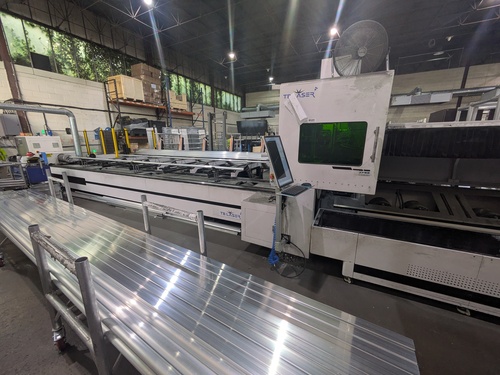
Materials are precisely cut to siize in the laser
The Executive Hire Show seems particularly important to UTS. What did you take from the last event?
“It was a really good show,” says Pete. “We’re well known for towers and podiums, but the show gave us an opportunity to demonstrate some of the other products as well, and we picked up a lot of interest in the One Man Tower.
“The difference this time is how much the range has moved on. So much has changed since February.
“We’ll make a bigger point of identifying what’s new this time. We’ll probably give products such as the One Man Tower and the GRP range another push because, although they’ve already been launched, they’re still relatively new.”
So will all the latest equipment be at the forthcoming Executive Hire Show?
“Yes, the intention is to show people how much the range has grown,” says Pete.
“The cantilever tower, for example, has only just received its certification, while we’ve also got further BS 1139-6 products progressing through structural engineering. It’s all part of creating that broader UTS offer.”
“And we’ve got something else planned for the show,” adds Michael.
Something you’re going to tell me about?
“No!” replies Michael.
“There are still things being worked on,” Pete adds. “One of them might be ready for the show.”
“It will be,” insists Michael.
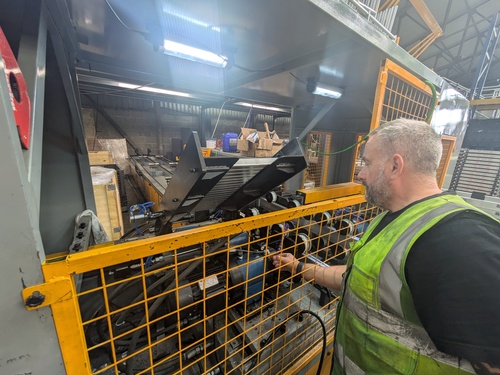
A barrier is required for some of the machinery
It sounds like UTS might need a larger stand next year...
“That’s something we’re looking at,” says Michael. “When we originally booked, the range wasn’t where it is now. So much has changed since February that having more space is something worth considering.”
Finally, Michael, is there a point where you decide UTS is big enough?
“If you start thinking, ‘That’s enough,’ you become complacent,” he says.
“We wouldn’t be investing six, seven or eight hundred thousand pounds in individual manufacturing cells if we thought we were finished. We’ve made that investment because we believe there’s more to come.”
“That’s the important thing,” concludes Pete. “We’ve grown from being a challenger, but we don’t want to become complacent. We want to keep developing products, keep looking after the customers who have committed to us and keep giving people a reason to buy the whole range from UTS.
“And by the time the Executive Hire Show comes around, there should be even more for them to see!”
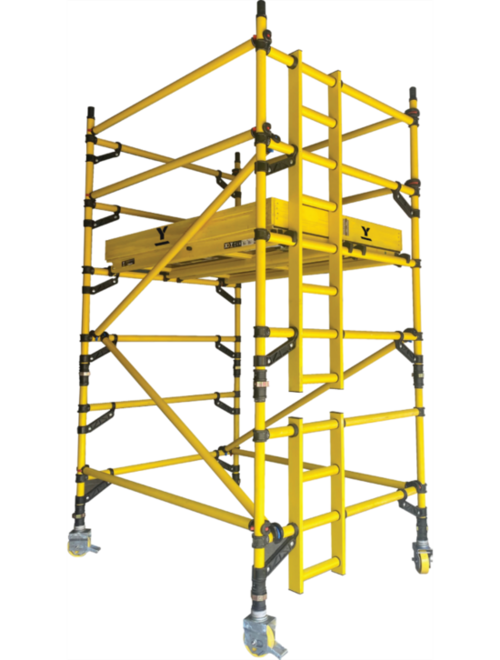
UTS showcased a GRP tower at last year's show - we can't wait to see what they bring to EHS 2027!
https://www.towersandpodiums.co.uk/