INDUSTRY NEWS
Executive Feature - think before you add AI to your depot CCTV
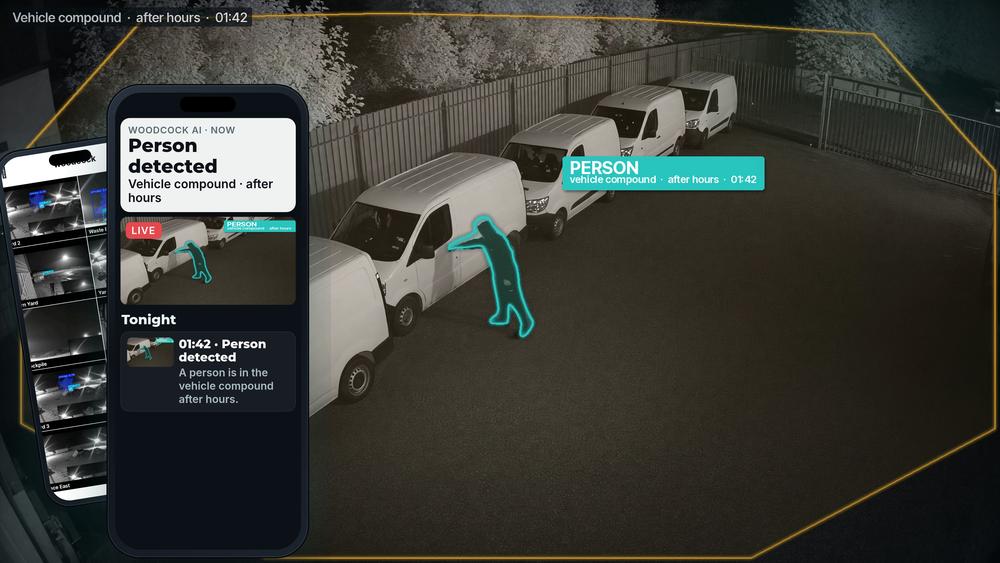
Are you making good use of your depot CCTV system? More to the point, are your cameras capturing the right details and are they catching the ne'er do wells after the shutters come down? Perhaps adding artificial intelligence is the answer, but Stuart Smith of Woodcock AI advises careful consideration before taking the plunge.
Hire companies are being offered AI detection on the cameras they already have. The useful first step is to check what those cameras can actually see after closing, and to be honest about their limits, before anything is added.
Most hire depots already have cameras on the yard gate, the counter, the returns area and the compound. They were usually fitted to record evidence after plant, tools, generators or fuel go missing. A view that records well in daylight can still be too wide, too dark on a winter evening, or blocked by stacked access towers, parked plant and returned kit for reliable detection around the places that matter. Before adding AI detection to those cameras, check what each one can actually see after the shutters come down.
Check every camera by day and after dark
Walk the depot twice: once during a busy returns day and once after closing. For each camera, look at the yard gate, the plant compound, the fuel and battery charging area, the returns bay, and the tool store. Ask whether a person or a vehicle in that area after hours would be clearly visible, or only well enough to review later.
Note seasonal stock that changes the view, plant parked in the foreground, and lighting that leaves the far side of the compound in darkness. A recorder that is working does not prove that a particular view is suitable for detection. Existing compatible IP cameras can usually feed detection software, with detection running on an edge server or in the cloud, but image quality and lighting decide what is realistic.
Draw detection areas around the places that matter
Detection works best when it watches a defined area. Rather than alerting on anything that moves across the whole picture, draw a polygon around the gate, the compound or the charging area you care about. The public road, the neighbouring unit and trees moving in the wind can then be ignored.
Schedule those areas out of hours, so the daytime traffic of customers, drivers and returns does not become a stream of alerts. Self-learning systems that adapt to what is normal on a particular depot can help with recurring background movement, but they do not replace a well-drawn shape and a schedule that matches how the branch actually operates. Revisit the shapes when the yard layout changes, as it often does through the season.
Be realistic about what existing cameras can flag
On compatible IP cameras, it is reasonable to look for a person or a vehicle in a closed yard after hours, for missing hi-vis or hard hats in the yard during working hours, and for visible smoke around battery charging and fuel areas. Those are events the lens can actually see, in places where an early warning is useful.
A lot of the rest is better left to fencing, locks, lighting and alarms. Software does not stop someone climbing a fence; it tells you sooner that they have. Visual smoke alerts, where they are used, are a supplementary early warning. They do not replace the fire detection you are required to have. A person should still review each alert and decide the response.
Decide who acts after hours
An alert is only useful if someone does something with it. Before switching anything on, agree who receives each type of alert: the branch manager, a keyholder, or a remote monitoring centre that can review the footage and escalate. A person in the compound at midnight is not the same as visible smoke near a charging bay, and the response should reflect that.
Check that signage is in place and that the depot’s CCTV policy covers detection, not only recording. Keep cameras pointed at the operator’s own property, not at the road or the unit next door.
Know when the honest answer is a new camera, and test first
Sometimes the check shows a gap that no software can fix: a fuel compound with no camera, a gate with no lighting, or a view blocked by stacked towers. In that case, the right answer is a new or repositioned camera, better lighting, or more power, rather than another software demonstration.
Before committing, run a live test on two or three of the depot’s existing cameras for a couple of weeks, ideally covering the gate, the compound and a charging or tool-store area. Look at what is flagged after hours, what is missed, and how many alerts arrive on a typical night. That short test, on your own cameras, will tell you more than any brochure. It will also show whether the views still work as the yard layout changes — and when they do not, you will know to move a camera rather than hope the software will catch up.
Stuart Smith is Strategic Partnerships and Marketing Executive at Woodcock AI, where he helps businesses protect people, assets and property 24/7, cutting fire, safety and security risk with AI-powered CCTV video analytics for fire, intrusion and health and safety detection. Woodcock AI’s platform plugs into existing CCTV and alerts teams in real time, and has been especially successful in waste handling and recycling, with the company now expanding into logistics, manufacturing, retail and construction.